
Treating substance use disorder
Psychiatrist-led care using deep TMS can support recovery from substance use disorders—especially for patients facing repeated relapse or treatment resistance.

What is Substance Use Disorder?
Substance use disorders (SUDs) are chronic brain conditions characterized by compulsive substance use, loss of control over intake, and continued use despite harmful consequences. These disorders affect neural circuits involved in reward, motivation, memory, and self-regulation.
SUDs can involve nicotine, alcohol, opioids, stimulants, or other substances—and often co-occur with mental health conditions like depression, anxiety, or PTSD. Without proper support, substance use can become deeply entrenched and hard to escape, even when the desire to quit is strong.
Treating Substance Use Disorder
Substance use alters the brain’s reward and decision-making systems, reinforcing cravings and compulsive behavior patterns. Even after detox or short-term abstinence, environmental cues, emotional stress, and neurological triggers can drive relapse.
Standard treatments like medications, psychotherapy, or behavioral programs can be helpful, but often fall short for individuals with long-term or repeated use patterns. That’s where targeted neuromodulation, like deep TMS, may offer an additional path forward.

Heal from Substance Use Disorder with dTMS
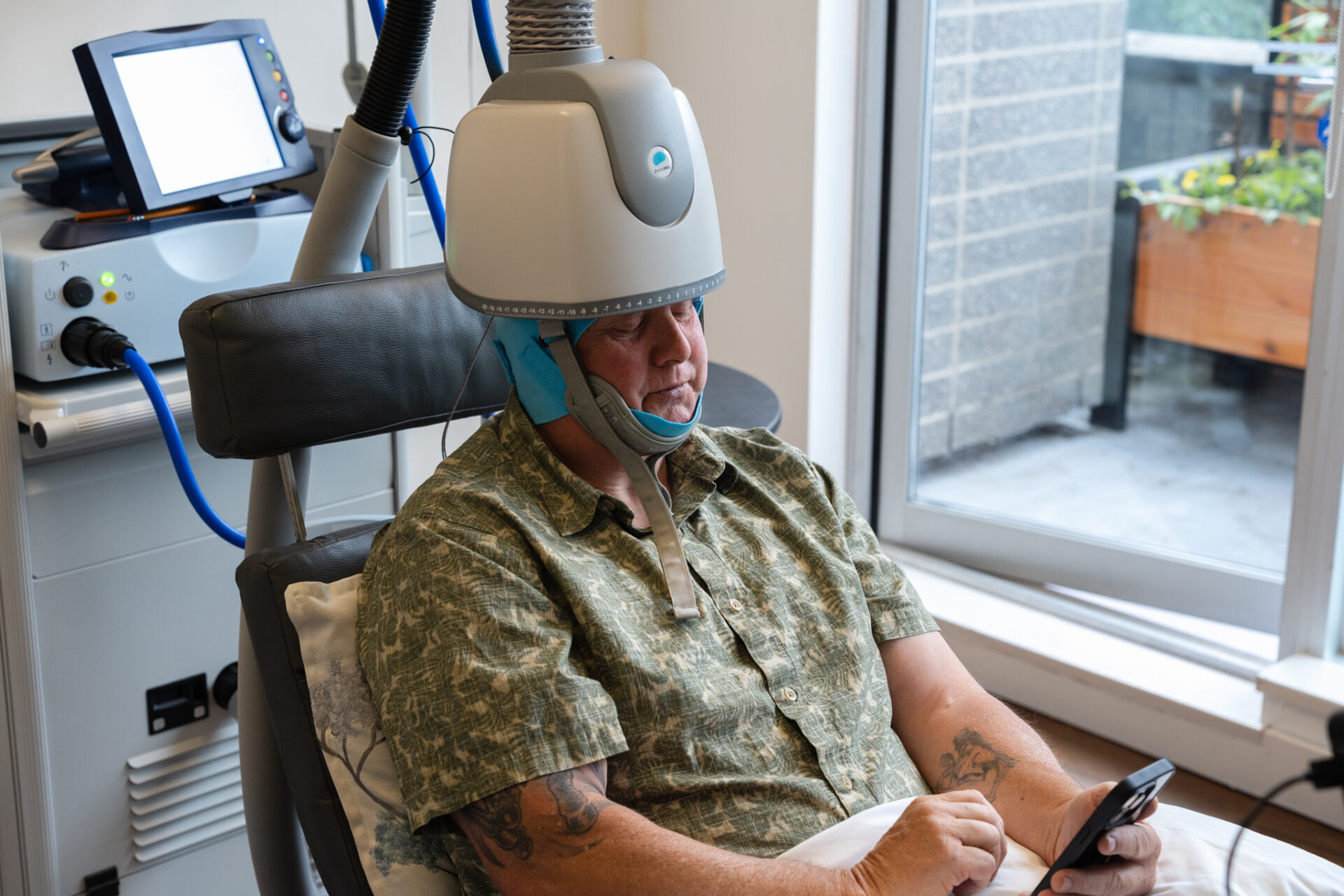
Deep Transcranial Magnetic Stimulation (dTMS) is a non-invasive treatment that stimulates brain regions involved in craving, impulse control, and addiction-related behaviour, particularly the prefrontal cortex and insula.
Clinical research has shown that dTMS can reduce cravings and improve quit rates in individuals with long-term substance dependence. At Neurogenesis Clinics, we integrate dTMS into personalized treatment plans to support recovery, especially for those who haven’t found success with traditional approaches alone.
How dTMS works for Substance Use Disorder
dTMS delivers magnetic pulses to specific regions of the brain involved in habit formation, craving, and reward response. By regulating these networks, it helps reduce compulsive substance-seeking behavior and supports long-term recovery.
The treatment is non-invasive, requires no medication or anesthesia, and is typically well tolerated. At Neurogenesis Clinics, every dTMS protocol is designed and overseen by our psychiatrist to ensure safe, clinically grounded care.
30%
Lorem ipsum dolor sit amet consectetur. Nulla metus scelerisque nisi viverra tempus pharetra convallis nisl dui. Ut in fermentum placerat leo.
27%
Lorem ipsum dolor sit amet consectetur. Nulla metus scelerisque nisi viverra tempus pharetra convallis nisl dui. Ut in fermentum placerat leo.
21%
Lorem ipsum dolor sit amet consectetur. Nulla metus scelerisque nisi viverra tempus pharetra convallis nisl dui. Ut in fermentum placerat leo.
94%
Lorem ipsum dolor sit amet consectetur. Nulla metus scelerisque nisi viverra tempus pharetra convallis nisl dui. Ut in fermentum placerat leo.
Take the next step
If you’re living with a treatment-resistant mental health condition, you’re not out of options. Start with a consultation or reach out with your questions.