
Treating OCD
We offer psychiatrist-directed care for obsessive-compulsive disorder, using deep TMS to help patients move forward when other treatments haven’t been enough.

What is obsessive-compulsive disorder (OCD)?
OCD is a chronic condition involving unwanted, intrusive thoughts (obsessions) and repetitive behaviors (compulsions) performed to relieve distress. These cycles can consume hours of each day and significantly disrupt daily life, relationships, and work.
OCD affects about 1–2% of the population and often begins in childhood or adolescence. Its causes are complex—linked to genetics, brain function, and life experiences.
How OCD affects daily life
For many, OCD doesn’t respond fully to therapy or medication. The condition can lead to exhaustion, social withdrawal, and an overwhelming sense of frustration. Patients often know their thoughts or behaviours aren’t logical but still feel unable to control them.
At Neurogenesis Clinics, we recognize the toll this can take—and we focus on approaches designed to break through when progress has stalled.

dTMS is a safe, effective treatment for OCD
For patients with persistent symptoms, deep transcranial magnetic stimulation (dTMS) offers a clinically proven treatment that directly targets the brain circuits involved in obsessive thoughts and compulsive behaviours.
At Neurogenesis Clinics, we use dTMS as a central part of care for treatment-resistant OCD,delivering focused stimulation to help disrupt the cycle of distress and create space for lasting change.
How dTMS works for OCD
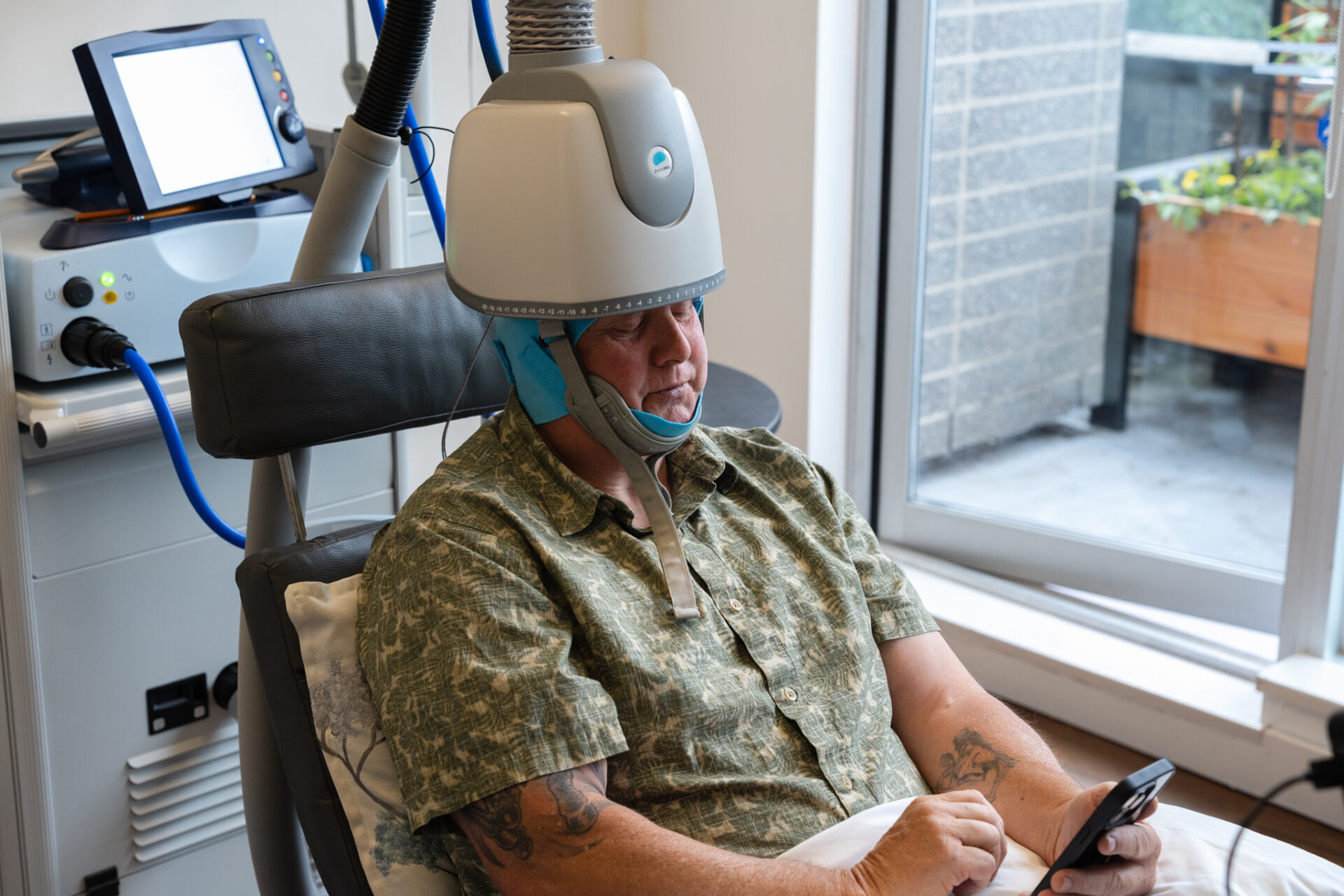
Deep TMS delivers magnetic pulses to the medial prefrontal cortex and anterior cingulate cortex—regions involved in obsessive thinking and compulsive behavior. By modulating activity in these circuits, dTMS helps reduce the intensity and frequency of symptoms at their neurological source.
At Neurogenesis Clinics, this treatment is carefully calibrated and overseen by our psychiatrist to ensure it aligns with each patient’s clinical profile and progress.
The treatment is non-invasive, requires no medication or anesthesia, and is typically well tolerated. At Neurogenesis Clinics, every dTMS protocol is designed and overseen by our psychiatrist to ensure safe, clinically grounded care.
30%
Lorem ipsum dolor sit amet consectetur. Nulla metus scelerisque nisi viverra tempus pharetra convallis nisl dui. Ut in fermentum placerat leo.
27%
Lorem ipsum dolor sit amet consectetur. Nulla metus scelerisque nisi viverra tempus pharetra convallis nisl dui. Ut in fermentum placerat leo.
21%
Lorem ipsum dolor sit amet consectetur. Nulla metus scelerisque nisi viverra tempus pharetra convallis nisl dui. Ut in fermentum placerat leo.
94%
Lorem ipsum dolor sit amet consectetur. Nulla metus scelerisque nisi viverra tempus pharetra convallis nisl dui. Ut in fermentum placerat leo.
Take the next step
If you’re living with a treatment-resistant mental health condition, you’re not out of options. Start with a consultation or reach out with your questions.